Supply Chain Uncertainty, Energy Prices, and Inflation

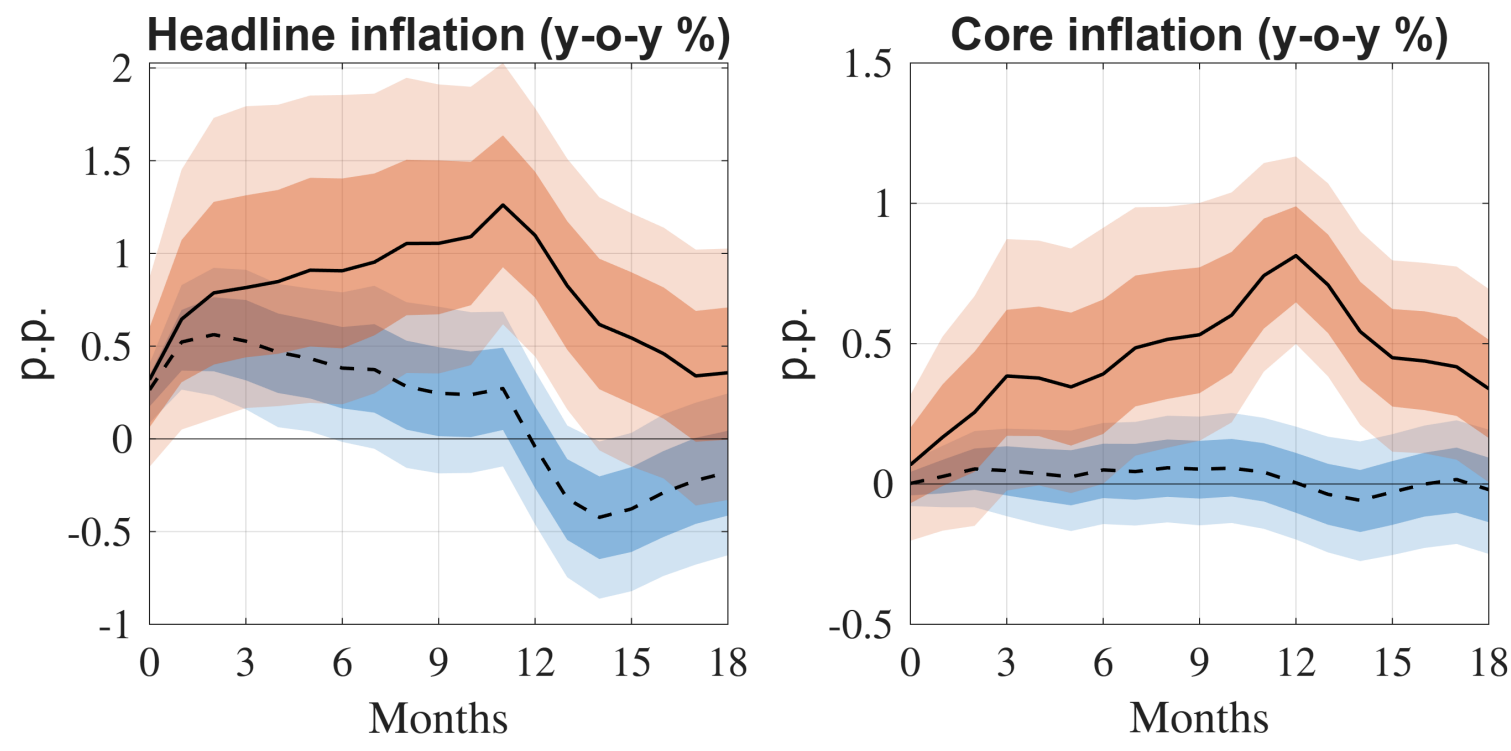
Abstract. Using U.S. and Euro area data, we document that (i) the pass-through of energy prices to inflation is state-dependent - stronger when supply chain uncertainty is elevated - and (ii) in such states, energy prices become more informative about logistical conditions. We develop a model in which firms combine energy and a specialized input transported through a capacity-constrained transportation network. When congestion binds, energy remains available in local markets at a premium, whereas the specialized input is subject to delivery delays. Because energy prices reflect both raw energy shocks and transportation conditions, firms treat them as noisy signals of supply disruptions and update beliefs through Bayesian learning. This signal-extraction channel increases perceived marginal costs, generating an uncertainty wedge that amplifies and propagates energy shocks. Within a general-equilibrium New Keynesian model, the mechanism raises the impact elasticity and the persistence of inflation in response to transitory energy shocks. This challenges the conventional monetary policy prescription to “look through” supply disturbances. ...

with Tommaso Monacelli (Bocconi)

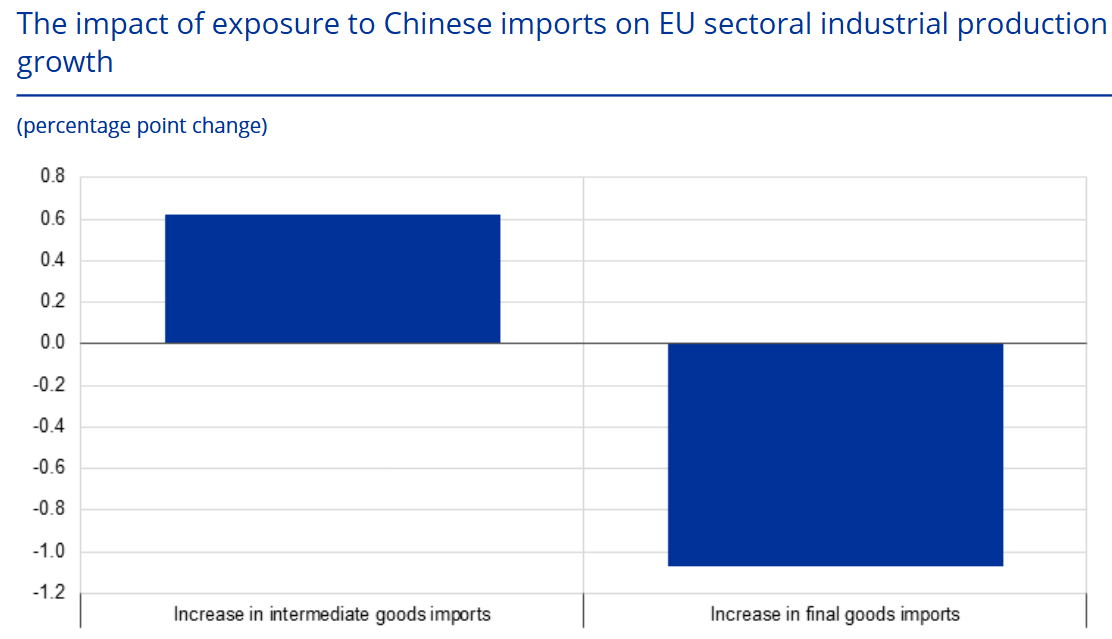
The impact of China’s industrial rise on the euro area

ECB bulletin article

with Alessandra Amicucci, Nicolò Gnocato, Vanessa Gunnella, Clara Lindemann, and Carlos Montes-Galdón

Tariffs, Uncertainty, and the Exchange Rate

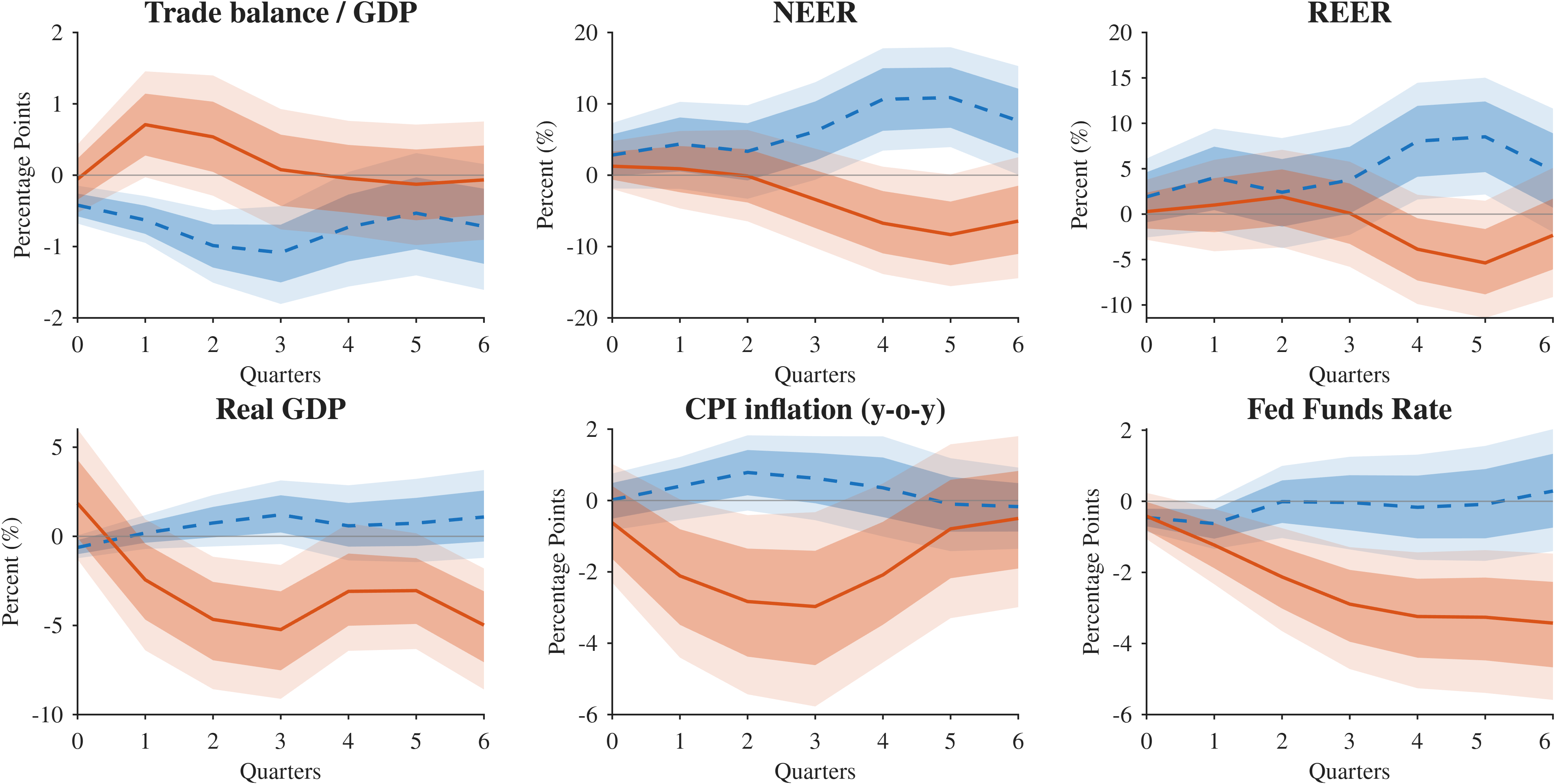
Abstract. We estimate the macroeconomic effects of U.S. tariff shocks in a Bayesian VAR identified via a narrative-dominance approach. In a sample starting in 1990, we find that tariff shocks: (i) reduce real activity, (ii) lower CPI inflation in the short run and raise it in the medium run, (iii) depreciate the U.S. dollar effective exchange rate, (iv) induce an S-shaped improvement of the trade balance, and (v) prompt an expansionary response of monetary policy. We show that the exchange-rate response depends on the degree of structural trade policy uncertainty (S-TPU), i.e., uncertainty about the persistence of the underlying trade-policy regime. We estimate S-TPU from a state-space stochastic-volatility model of tariff rates. When S-TPU is low, tariffs raise economic activity and inflation, and appreciate the exchange rate, in line with the textbook prediction. When S-TPU is high, the same shock depreciates the exchange rate, depresses economic activity, and elicits a more accommodative monetary policy response. We rationalize these findings in a model with incomplete international financial markets and uncertainty about the persistence of tariff policy. When uncertainty is sufficiently high, agents partially perceive transitory tariffs as persistent and borrow against expected future trade surpluses, leading to a depreciation of the exchange rate. ...

with Tommaso Monacelli (Bocconi)