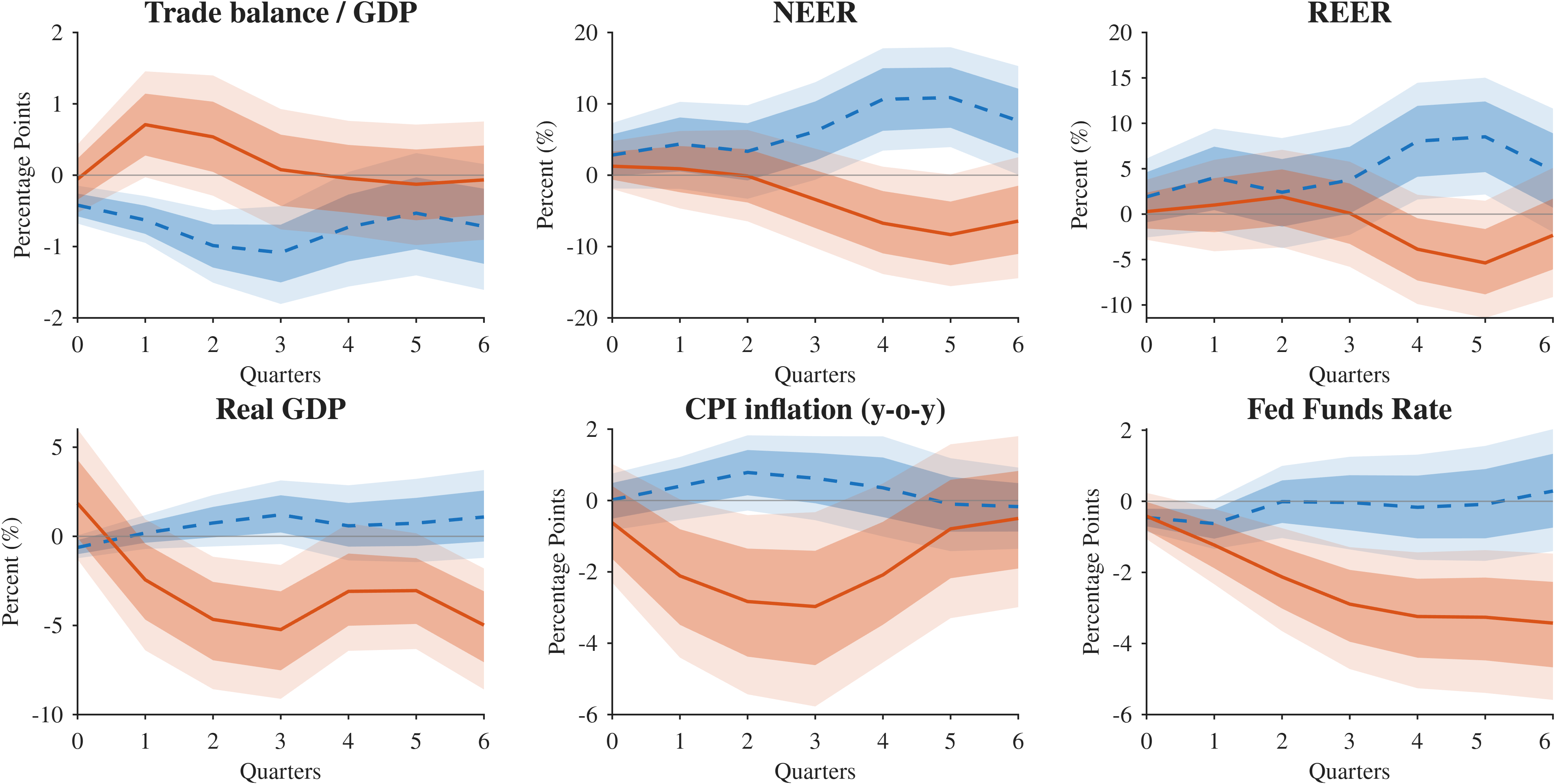
Abstract. We estimate the macroeconomic effects of U.S. tariff shocks in a Bayesian VAR identified through narrative dominance. In the short run, tariffs transmit as a negative demand shock: they reduce both activity and inflation, and prompt a monetary policy easing. Furthermore, they depreciate the effective U.S. dollar exchange rate, and generate an S-shaped improvement in the trade balance. These average effects depend critically on structural trade policy uncertainty (S-TPU)—uncertainty about the persistence of the trade-policy regime—which we estimate from a state-space stochastic-volatility model of tariff rates. When S-TPU is low, tariffs raise activity and inflation and appreciate the dollar, consistent with textbook predictions. When S-TPU is high, the same shock depresses activity, depreciates the dollar, and prompts a more accommodative monetary response. We rationalize these findings in an equilibrium model of the exchange rate with uncertainty about the persistence of tariff policy.
Status. Forthcoming in Economic Policy: Papers on European and Global Issues (December issue).
Coverage. CEPR Economic Vox Talks
Download paper (PDF) Paper presented at the 2026 Economic Policy conference